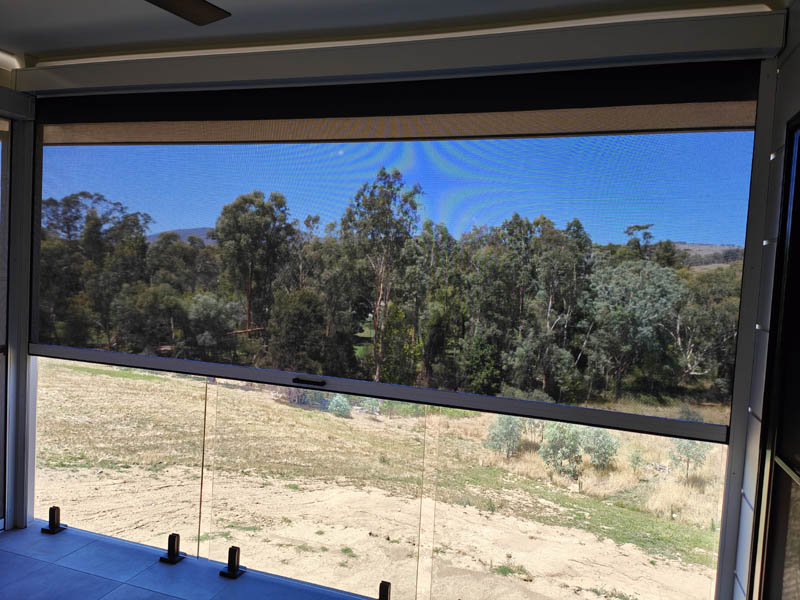
An outdoor entertaining area is only as good as the weather lets it be. Alfresco blinds change that — but the right ones depend far less on what looks good in a brochure than on three things about your specific space: which way it faces, how exposed it is, and what you actually do out there.
Start with wind, not sun
Wind is what decides whether a space is usable, and it is the factor people underestimate most. A blind that lifts and flaps in a gust is not protecting anything — it is a sail.
This is the practical argument for zip track. The fabric locks into a channel down each side, so it stays under tension across the full opening instead of being held only at the top and bottom. That gives a tighter weather seal at the edges and noticeably stronger wind resistance, and the systems are coastal-approved for durability in genuinely exposed conditions.
If your alfresco catches the westerly, or sits on a corner with nothing to break the wind, this is the part of the specification that matters. Everything else is comfort.
Ask at the measure: which way does the wind normally come from, and is there anything between you and it? A blind on the exposed side may need a different fabric from the sheltered side of the same space.
Then sun direction
Which way the space faces changes what the fabric has to do. A west-facing deck takes the full afternoon sun and needs UV protection and real glare reduction — the difference between a space you retreat from at four o’clock and one you sit in. A south-facing courtyard has the opposite problem: it is sheltered from the worst sun but colder for longer, so the question becomes how much weather you want to shut out in winter.
Then how you actually use it
Fabric weights and mesh densities run across a range, and the right point on that range depends on use rather than taste:
- Lightweight sun-filtering screens — shade and glare reduction, while keeping the outlook and letting air move through. Good for hot, exposed decks you use in summer.
- Heavier, fully enclosing fabrics — wind and weather protection, holding warmth in. Good for dining and sitting areas you want through the colder months.
- Insect-resistant mesh — available alongside the standard wind and UV-resistant fabrics, which matters more on a summer evening than any other feature.
An area you eat in most nights has different priorities from one you use a few weekends a season. That is the question we ask first, because it decides the rest.
Zip track or standard outdoor blinds?
Standard outdoor blinds are a proven, straightforward way to shade and screen a space, and on a sheltered patio they do the job. The trade-off is at the edges: they are held top and bottom with the sides left open, so wind and driven rain get in, and the ropes and fixings stay visible.
Zip track costs more and buys you the sealed channel — a tighter seal, stronger wind resistance, a cleaner finished look, and the option to motorise wide spans. On an exposed space it is usually the difference between using the area and not bothering.
Will it fit what you already have?
Almost always, yes. Outdoor and zip track blinds can be measured and fitted to most existing patio and alfresco structures, not just new builds — we assess the structure at the measure and confirm what the tracks can fix back to. Custom sizing covers patios, alfresco areas and verandas, including awkward spans.
The short version
Exposed to wind? Zip track. Facing west? Prioritise UV and glare. Using it year-round? Go heavier. Eating outside in summer? Add insect mesh. Then let someone stand in the space with you and check it, because the wind in your backyard does not read brochures.